Showing posts with label gardening. Show all posts

Sunday, August 4, 2013

Hollyhocks!


Normally, I would post these photos on my photography blog, Daisy's Photography. However, since I got these hollyhocks seeds from my friend and fellow blogger Tami at Just One More Thing... in Nebraska, I figured this was the place for this post.

We have hollyhocks!! I love hollyhocks, especially these old-fashioned single ones.   Besides being beautiful, they are taller than me!  I love that about them.    

The hollyhock plant is a biannual. That means it needs two full growing seasons to bloom. I planted these last year and have waited since then to see the blooms.   They are so gorgeous that it was well worth the wait.   

When we got the first blooms, I assumed that the rest would be the same colour. Not. However, I couldn't be more thrilled.   What a great variety!  

Pink with light pink tips and purplish centres:
Hollyhocks

Pink:
Hollyhocks V

White tips with purple centres: Hollyhocks IV

Purple:
Hollyhocks III

They have been blooming for 3-4 weeks now and it looks like they'll probably be going for a bit yet. You'll notice in the photos below that they are surrounded by chicken wire. As it turns out, deer love hollyhocks. I didn't know that until one morning when I woke up to find that one plant had been munched on, the whole side and top were missing. No way, no how were the deer going to eat these guys. The "fence" went up that day.

Here's a shot from July 15: Hollyhocks II

The same hollyhocks this morning, August 4: Hollyhocks VII

Hollyhocks VI

Aren't they awesome? We love them so much, we've planted two more small patches so we'll have blooms again next year (hopefully.)

Saturday, June 22, 2013

Our New Vegetable Garden

This year we decided to finally put in a vegetable garden. This spot was an old perennial flower garden that was very neglected by the previous owner. A few years ago, we cleaned it up and moved in a couple more plants. Still, it wasn't a great looking garden and keeping the deer out was a losing battle. Then the flood of 2011 wiped out everything. As it turned out, it was a blessing in disguise, at least for this spot. It really needed a complete overhaul and the flood accomplished some of that without that much work from us. I would have liked to save some of the plants, but oh, well.

Vegetable Garden
Click on the photo for a better view.  

Last year, we began prepping the area by rototilling it several times and removing some limestone slabs that at one time made up a path to/from/around the garden. This year, we supplemented the soil with mushroom manure, top soil and peat moss then rototilled some more. We knew if there was any chance at all of a garden surviving the munching deer and rabbits it would have to be fenced in. We didn't want anything permanent or too expensive, though, so we bought some stakes and stucco wire to construct our 5' tall makeshift fence.

We were about a week or so late in planting because of the awful spring we had.    We actually planted some of the seeds before the fence went up because we knew we were getting a late start.  Besides, deer don't eat seeds.  ;)  We should have enough of the growing season left to have a bountiful harvest, but I guess that's up to the weather and Mother Nature.    Next year we hope to get an earlier start.

Deciding what to plant wasn't really that hard. We basically planted what we wanted to eat. Both of our parents had vegetable garden when we were growing up, so we started with what they grew then added and subtracted as needed. The wonderful lady at the nursery was a tremendous help and steered us towards some popular crops that we wouldn't have thought of such as kale, spinach, lettuce, and parsnips.

Here's what we are growing:
Lettuce
Kale
Spinach
Tomatoes (3 kinds)
Peppers (4 kinds)
Cucumbers
Zucchini
Brussels Sprouts
Carrots
Parsnips
Beets
Peas
Beans
Radishes
Potatoes (3 kinds)
Spaghetti Squash

Then on a whim and as an experiment we put in:
eggplant
leeks

So far, everything looks good. All of the crops started from seed have sprouted and the bedding plants are either growing or holding their own. It'll be awhile before we have anything to harvest, but we are hopeful and waiting in anticipation.   

By the way, there are a few other things you can see in the photo besides the garden:
  • long grass - that's our new "meadow", I'll be writing about that in another post. 
  • dead trees - they didn't come back after the flood two years ago.   I'll be writing about that when we start cutting them down. 
That's it for now.   I'll try to provide another update in a couple of weeks.

Saturday, June 8, 2013

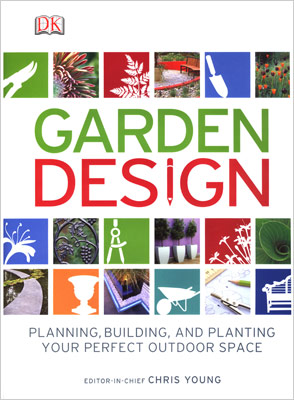
Garden Design by DK Publshing

DK is celebrating spring with its Spring into Gardening promotion. I'm a little late in posting this so if gardening is your thing and you need some gardening books for help, motivation or inspiration, hop on over to DK's website for some great deals on gardening books. Here's my review on one of them:


Garden Design guides the gardener through the design process of creating a perfect outdoor space. It also includes practical advice on implement the plan by picking the best plants and materials.

This book is awesome! It's packed with large wonderful photographs and useful advice. It provided me with tons of inspiration and ideas for my garden that just might keep me busy for years. The book is separated into four logical sections: how to design, choosing a style, making a garden, plant and material guide.

The how to design section starts off things to consider before starting. It then goes through reading plans, using shapes and layouts as well as other design elements. It talks about colour and materials for "hard" items, such was surfaces, screens, structures, etc. and the "soft" items (plants) in general terms. The creating a site plan part goes through some key aspects of creating a plan and looking at options. A planting plan is next. I absolutely loved all of the examples given as well as the case studies, but the rest of the information was a little too brief for me to get a good handle on it.

The choosing a style section briefly explains the different styles. It then launches into more detailed explanations of each one featuring key design elements, influences, garden to visit (for inspiration) before showing some examples. In all, the book goes through 14 different styles. They include: formal, cottage, Japanese, urban, country, modernist, and many more. I have such eclectic tastes that I can't decide which one I like best. I love the clean, straight lines and minimalism of the modernist; the beauty and simplicity of the Japanese; the quirky and fun fusion garden; the originality of the concept garden; and even though I don't have children, the functionality of the family garden. Maybe when I win the lottery I can have one of each.

The making a garden section offers practical information on following through with the plans. The building garden structures part has how-to information on laying a path/patio, building a deck/fence/pergola, as well as putting in a pond. The planting techniques part looks at how-to plant and care for your garden.

Finally, the plant and material guide, suggests options for what to put in your garden. The plant part suggests options for the "soft" item, like trees, shrubs, perennials. I love that the legend for the symbols used is on every other page. No flipping back and forth! For each plant, there's a photo along with a general description. It also lists the size, sun/shade needs, water requirements, and hardiness. Unfortunately, this book doesn't use the hardiness zones we use here in Canada. Instead, it describes plants as being "fully hardy" or "hardy in mild regions/sheltered sites". That's nice, but I'm not sure what that means exactly. There's also a list of suggested alternatives.

The materials guide suggests options for the hard landscaping items in your yard; surfaces, walls and railings, screen and gates, structures and storage, and more. For each option, there's a photo, general descriptions, low/medium/high cost, durability, and colour options. Some of these options are just gorgeous. I had no idea that some of them even existed. I could get really carried away. Unfortunately, my budget has limits.

The table of contents is pretty good. It lists the four main sections along with major items within those sections. The index is quite extensive.

Highly recommended.

For more information about this book or to browse inside, please visit DK's website.

I'd like to thank those nice people at DK Canada for this review copy.

Garden Design by DK Publishing, Dorling Kindersley (DK), ©2009. ISBN 9780756642747(Hardcover), 360p.

Friday, June 7, 2013

Canadian Gardener's Guide by DK Publishing

DK is celebrating spring with its Spring into Gardening promotion. I'm a little late in posting this so if gardening is your thing and you need some gardening books for help, motivation or inspiration, hop on over to DK's website for some great deals on gardening books. Here's my review on one of them:


Canadian Gardener's Guide is filled with helpful advice, ideas and techniques for the Canadian Gardener.

This is a great book. I love that it touches upon many aspects of gardening. From designing and planting to growing your own veggies, troubleshooting problems and selecting the right plant for the right location or look. It really is a terrific book.

It starts off with the basics for the beginning gardener. However, even seasoned gardeners will find useful advice in this section.

The design section takes the gardener though the different designs focusing on the key aspects of each one. Whether it's a place to entertain, a productive garden, a family garden or something else, each 4-page spread features an explanation of the space, a labelled layout, and photographs/explanations of the items that fit with that style. The section also includes how-tos for fence posts, paths or patios, decks, and pergolas.

The plant your garden section features more general information on plants. It's not a how-to guide for planting. It focuses more on designing with the "soft" items (i.e. plants) with style in mind.

The grow your own section uses a hands-on approach. It talks about tools and equipment, preparing the site and other things the gardener needs to know to start growing their own vegetables. The vegetable crop planner (page 202-205) was interesting, but I needed more information on what it meant. The time frames for sowing/planting/harvesting some of the veggies were definitely not meant for the prairies. Harvesting in December? The only thing we harvest in December is snow! My favourite part of this whole section is the information on the specific crops: tomatoes, lettuce, beans, peas, kale, Brussels sprouts. This is going to be invaluable because we planted a vegetable garden this year for the first time. There's a similar section for fruit.

The care for your garden section lists general gardening activities for different seasons, shows the gardener how to water, how to save water, how to plant in containers, how to prune, as well as propagation techniques and care advice for lawns, meadows and ponds.

The help and advice section offers troubleshooting advice for problems in the garden. Whether it's weeds, pests, or deficiencies, the book can help the gardener diagnose what's wrong and potentially fix it. My favourite parts of this section is the A-Z list of common pests and the A-Z list of diseases and disorders. Extremely informative.

The final section is called plant chooser. There are 30 lists for different situations, soil conditions, garden location, etc. Included are: plants of summer containers, water and bog plants, climbers for shade, structural plants, plants for hot, dry sites, and many more. Each of the lists include photos, descriptions, size, sun/shade needs, and water requirements. I absolutely love that the legend for the symbols used is in this part is on every 2nd page. No flipping back and forth. Each of these lists also features some alternative suggestions for plants.

The hardiness zone maps on the endpapers are large and fairly easy to read. It's very cool to see how the zones change radically from west to east and north to south in this country.

The table of contents is huge! It not only lists all of the major sections, but also all of the topics, projects, and whatnot within each section. I love that. The index is pretty extensive. That should help the gardener find information quickly.

Highly recommended.

For more information about this book or to browse inside, please visit DK's website.

I'd like to thank those nice people at DK Canada for this review copy.

Canadian Gardener's Guide by DK, Dorling Kindersley (DK), ©2012. ISBN 978155631781(Hardcover), 448p.

Thursday, June 6, 2013

Gardening Shortcuts by Jenny Hendy

DK is celebrating spring with its Spring into Gardening promotion. I'm a little late in posting this so if gardening is your thing and you need some gardening books for help, motivation or inspiration, hop on over to DK's website for some great deals on gardening books. Here's my review on one of these awesome books:


Gardening Shortcuts breaks down gardening tasks into small chunks so that you can accomplish things in your garden in a relatively short period of time. It has step-by-step instructions for projects as well as plenty of other advice to get your garden, yard and patio looking ship-shape in no time.

This is such an awesome book. Sometimes large project feel daunting because it can be awhile before you see progress, so I love the idea of breaking up the projects into smaller pieces. It makes me feel like I've accomplished something and motivates me to do more. It also allows me to spruce up or fix one part of the yard at a time without having to invest a whole afternoon.

The introduction includes some information on soil type, ground preparation, containers, seeds and buying plants as well as basic tools needed. This stuff is presented up front to avoid repetition later on in the book.

The rest of the book is kind of a mish-mash of ideas and projects. It has some project pages with step-by-step instructions, equipment lists and photos. There are also 2-page spreads that show you how to achieve a certain look in the garden. It lists the plants and elements need to impart a particular style. Other 2-page spreads feature advice on general maintenance. They list a number of jobs and/or projects for the different areas of your yard or garden.

There are a few pages that deal with the garden over winter. Since snow isn't mentioned, I can only assume that this book isn't meant for the Canadian prairies where I live. That's ok. There's enough for me in the other pages to make it a worthwhile read.

The book is filled with wonderful projects and ideas. Here are a few that I picked out to try:
  • DIY patio canopy (page 34). I don't have a pergola yet, but I hope to in the near future. This will provide a little shade and some privacy on the deck. Did I mention we don't have a deck yet, either? That's coming soon, too.
  • Privacy screens (page 36). Because many of the trees have been cleared around our house (previous owners, not us), our yard is wide-open and not that private. I'm hoping to use some of these ideas to create a few private areas in our yard.
  •   Lawn into meadow (page 102) and Wildflower meadow (page 170). We have a large section (just over an acre) in our yard that we don't use for much. We are hoping to turn it into a wildflower meadow. That is, if we can keep the weeds down. So far, we left the grass long, mowed a path so that we could walk around it, and threw down a bunch of wildflower seeds. There are still a few tasks, like weed control, that need to be done, but now it's pretty much just wait for the grass and wildflowers to grow. I can certainly do that.

The table of contents is extensive. It lists all of the projects/ideas/tasks in all of the major sections. The index is pretty good, however, I think it's missing some entries. When I was looking for the "meadow" pages, I couldn't find them. Since there are two of them, I would think that warrants an index entry.

Highly recommended.

For more information about this book or to browse inside, please visit DK's website.

I'd like to thank those nice people at DK Canada for this review copy.

Gardening Shortcuts by Jenny Hendy, Dorling Kindersley (DK), ©2012. ISBN 9780756689780(Softcover), 192p.

Great Canadian Plant Guide by DK Publishing

DK is celebrating spring with its Spring into Gardening promotion. I'm a little late in posting this so if gardening is your thing and you need some gardening books for help, motivation or inspiration, hop on over to DK's website for some great deals on gardening books. Here's my review on one of these awesome books:


The Great Canadian Plant Guide offers information on over 3,000 plants for Canadian gardens and lots of general information to help gardeners achieve great results.

This is a great little book with lots of photos and information on more plants than I knew existed. It not only covers perennials, but also annuals and bedding plants. For each plant, there's a short description of the plant and/or bloom as well as information on cultivation, sun and moisture requirements, hardiness zone and size. All of this information is presented with a photo.

The book starts off with a really good introduction on shopping for plants (how to get the right ones, healthy ones), preparing the soil and planting. Closer to the back of the book, there's a planting guide which features a number of plant lists for various conditions, seasons and garden designs. The lists include: plants for poor soil, plants for spring color (which should be "colour"), plants for clay soil, cool color schemes, plants to attract garden birds, and many more. It even includes lists for containers, baskets, and bulbs.

It's small size, roughly 4.25"x5.25", could be really handy for some gardeners. It's small enough to pop into a purse or tote bag or even just carry around the garden store. However, I found it a bit unwieldy to handle. It's small format made the book almost 2" thick, which made the book an odd shape. I don't even think it would look nice on a bookshelf when not in use. The photographs and type are large enough for me to see clearly, but the plant hardiness zone maps on the end papers are not. If the format was enlarged to 8"x10", it thickness would be cut down, which might make it easier to handle.

The book uses the botanical (or Latin) names for many of the plants. There are references to the common names in some cases, but not enough for my liking. For example, in order to find information on a "plume poppy" that I wanted to purchase, I had to first go to the internet to look up the Latin name, "Macleaya cordata", then look that name up in the book. However, since I had already looked it up on the internet, I just read about it there.

Like many other garden books, this one uses symbols for soil moisture preferences/tolerances, sun/shade preferences/tolerances, and hardiness zones. I marked the legend with a little sticky note so that I could easily reference that page when I forgot what the symbols meant.

The table of contents is extremely short, with only 6 entries, if you count the introduction, index and acknowledgements. That leaves only 3 entries for the meat of the book. I'm not sure it's going to be much help. The index, however, is quite extensive and should help the gardener find what they are looking for.

Recommended, even with its shortcomings.

For more information about this book or to browse inside, please visit DK's website.

I'd like to thank those nice people at DK Canada for this review copy.

Great Canadian Plant Guide by DK Publishing, Dorling Kindersley (DK), ©2012. ISBN 9781553631774(Softcover), 704p.

Tuesday, January 8, 2013

Grow Plants in Pots by DK Publishing

Grow Plants in Pots offers tips and advice on how to grow a variety of plants in containers. It covers houseplants, outdoor plants as well as fruits, vegetables, and herbs.

  This is a very cool book. It's well-designed with lots of beautiful photographs and is filled with tons of tips and great advice to achieving your ideal garden in pots. I should state that I haven't actually tried any of this tips yet, so I can't vouch for their veracity. However, the book has provided me with tons of inspiration and lots of things to try once the weather warms up.

For each plants featured, the book provides some standard information: plant name, height and spread, exposure, temperature needs (but not the gardening zones I'm used to), suitable size and material for the container, and planting media. As for planting media, the book suggests a specific type and specific brand, John Innes, which I'm not familiar with. I googled it and it appears to be something available in the UK. I would have been nice if it was explained further in the book.

I love the look of containers in gardens, but have never managed to get "the look" I want. The design part of the book is going to help with that. It features a the variety of containers in different applications so that I can achieve my "look". I especially love the sleek modern containers. They probably wouldn't go with the style of my current house, but I'd love to have those someday.

The other problem I have with container gardening is that I tend to pick the wrong plant or care for it improperly so that halfway through the season, it's not looking it's best and I'm frustrated at my attempt. The reminder of the book addresses that issue. There's a section on foliage and flowers, fruits and vegetables as well as a planting guide for general care and disease/pest issues. Next year we plan on putting in a vegetable garden. Thanks to this book, I plan on putting a few of them in containers.

I also appreciated the houseplant information. Many of my houseplants have been inherited, so I know very little about them. This book was a great help in identifying them and giving me information on their care.

Unfortunately, the book doesn't cover winter care or overwintering tips for extreme winter temperatures (-30C). There are some that are applicable, but not that many. Most of the suggestions would probably work for climates a lot warmer than the Canadian prairies.

The table of contents has the 4 major sections listed as well as the major items (with page numbers) within each section. It also features an A-Z list of plants featured in the book. This last part is unique and awesome! As for the index, it's quite extensive and should help with finding items in the book.

You're probably thinking that it's a little weird to be reviewing a gardening book in the dead of winter. However, I think winter is the perfect time to plan next year's garden. I like to take my time and come up with different plans before choosing the best one. Also, I find that reading or perusing gardening books when I have the winter blues is a wonderful pick-me-up. It really gives me something to look forward to when it's freezing outside and my garden is under 3 feet of snow.

Highly recommended for those wanting to add containers to their indoor and outdoor spaces.  It would be most helpful for those in climates warmer than the Canadian prairies.    

For more information about this book or to browse inside, please visit DK's website.

I'd like to thank those nice people at DK Canada for this review copy.

Grow Plants in Pots by DK Publishing, Dorling Kindersley, ©2011. ISBN 9780756682507(Soft cover), 256p.