The Slow Cook Book features recipes for both slow cookers and more traditional slow cooking methods. There are recipes for soups, stews, casseroles, curries, chilis, pot roasts, and even a few desserts.
This is a really good cookbook. I don't use my slow cooker as much as I should, but this book has encouraged me to use it more often. I love that there are so many delicious sounding recipes to try. I made a number of them so far and each of them has turned out pretty good.
The book starts off with an introductory section that includes: types of cooking, pantry essentials, choosing ingredients, and some cooking techniques. I particularly like the photos in this section.
The next section is called "Recipe Choosers". It sort of neat, but I'm not sure how useful it's going to be. Along with the recipe titles, there are photographs, page numbers, and cooking times sorted by the main protein used. However, this section doesn't have include all of the recipes in the book. I'm confused as to why the author chose to highlight these, but not others. Also, some of this information is already presented in the index, albeit, not as beautifully. Oh, well. It's pretty to look at.
On to the recipes. Each of them features: the number of servings, the recommended maximum freeze time (if applicable), instructions, prep time, and cooking time for both slow cookers and traditional slow cooking methods. Some of the recipes have photographs of the finished dish, however, sadly, many of the recipes don't.
Speaking of photographs, the ones in this book are quite nice. Not ultra-contemporary mind you, but mouth-watering, nevertheless. It's odd, though, that there's only one photograph of a slow cooker. And there's no food in it. All of the other photos (for cooking techniques and for presenting the dishes) are either on plates, bowls, pots, or dutch ovens. I just find that a bit strange for a book about cooking in a slow cooker.
The instructions are laid out nicely and quite easy to follow. There are a number of recipes that have been labelled "healthy". However, I couldn't find anything to tell me the criteria for this designation. Are they low fat? High fibre? High protein? That would be nice to know.
The book also contains a table of contents and index.
Recommended. If you use your slow cooker all the time, you'll find some new interesting recipes to try. If you don't use your slow cooker a lot, this book will likely inspire you to dig it out and plug it in.
For more information about this book, please visit Amazon's website.
I'd like to thank Chris at DK Canada for this review copy.
The Slow Cook Book by Heather Whinney, Dorling Kindersley (DK), ©2013. ISBN 9781553632191(Soft cover), 352p.
Showing posts with label nonfiction. Show all posts
Wednesday, March 16, 2016
Energy Bites by DK Publishing
Energy Bites features bite-sized high-protein snack recipes. Each of the recipes contain good-for-you ingredients for "increased vitality and wellness".
This is such a great book. It's small in size and only contains 15 recipes, but it's filled with nutritional information and suggestions for recipe variations. The possibilities seem almost endless. I love the contemporary layout.
The book starts off with an ingredients section. It's not just a list, however. It explains the nutritional importance of the ingredients used in the recipes. Next, there are general directions on how to make the no-bake and baked/pan-fried balls. In addition, there are directions on how to prep (soaking, boiling, roasting, etc.) some of the ingredients before the ball making can begin.
For each of the recipes, there's a list of ingredients, directions for making the balls, some nutritional information, as well as a gorgeous photograph of the finished product.
All of the recipes sound great and I've already made a list of ones I have to make for sure. There's really only one that doesn't appeal to me: Carrot & Red Beet Buckwheat Balls (page 24). I adore beets, but I don't like buckwheat...at all. I'm sure if I substitute another grain, though, they'll be yummy.
Because the recipes look so good, I immediately had to try a couple of them. Both the Peanut Butter & Banana Balls (page 44) and Sweet Potato Spicy Bites (page 34) turned out great. We ate the sweet ones for a snack, and the savoury ones with chicken and Brussels sprouts for supper. My husband thought the sweet potato bites needed a little something and since they are a bit spicy, I quickly made a dip out of Greek yogurt. Yum. My only complaint is that the recipe called for one sweet potato. No size or measurement mentioned. If you've ever bought sweet potatoes, you know they come in varying sizes...from those that fit neatly in the palm of your hand to others about half the size of a football (see Superstore for these ones).
Most of the recipes call for a food processor to chop up or incorporate the ingredients. However, if you don't have one, the book provides some alternatives so that the balls can be made by hand. I like this idea because cleaning out a food processor isn't my favourite job and sometimes mixing by hand is just easier.
There's one other thing I should mention about the book. It contains some ingredients that might be a little hard to find. Things like acai powder, bee pollen, moringa powder, and spirulina, probably won't be on your grocer's shelves. A health food store or online might be the a good place to find these. Don't worry, though, those ingredients don't make up the bulk of the balls. In fact, for one of the recipes I tried, I just omitted the ingredient.
As an added bonus, DK, the publisher, has a page on their website dedicated to one of these delicious sounding bites: Tropical Immune Boosters (page 42). Click here for a video and PDF download of the recipe. These look so delicious and are definitely on my list to try. The only reason I haven't made them yet is because I didn't have all of the ingredients on hand.
The book also contains a table of contents, glossary, and index. I really like the table of contents a lot. It starts with a list of general items, then uses pictures and page numbers for the recipes. Cool idea.
Highly recommended.
For more information about this book, please visit Amazon's website. To take a quick peek inside, click on the book cover!
I'd like to thank Chris at DK Canada for this review copy.
Energy Bites by DK Publishing, Dorling Kindersley (DK), ©2016. ISBN 9781465451538(Hardcover), 61p.
Saturday, March 22, 2014
Crochet: The Complete Step-by-Step Guide by DK Publishing
Crochet: The Complete Step-by-Step Guide features more than 80 crocheting projects for both beginners and more advanced crocheters. It starts off with some basic techniques and mini projects to get beginners off to a good start before launching into some more complicated patterns.
I love this book!!! I think I learned some crochet stitches many years ago, but I didn't learn enough to make anything. Because this book has both techniques and patterns, it's perfect for me.
Many years ago (30+), I really wasn't that interested in pursuing crocheting further because at the time it seemed like a "granny" craft to me. That image was further enhanced by all of the "granny square" projects, which I'm not fond of. This book changed all of that! These patterns are modern as well as fashionable. Even the "granny square" ones looks like they've been updated, to a point.
The book is divided into two sections: tools and techniques; and project patterns. The first section features information on yarn types, choosing colours, caring for your work, hooks and other equipment, and basic stitches, as well as more complex stitches and techniques. It also shows the reader how to read patterns as well as charts. I'm particularly interested in learning how to read the charts because they are very new to me. It looks hard, but I'm willing to go it a go.
I like how the book shows the reader a few basics then launches into a mini-project so that they can use what they just learned. I also like that the stitches are shown in a logical order...in this case, by height. So, the single crochet comes before the half-double crochet, which is followed by the double crochet. It's a little thing, but to me it makes sense and builds upon previous lessons.
The project patterns section is broken down into categories: blankets and pillows; home and gifts; hats and scarves; gloves, socks and slippers; what to wear; toys; and bags.
I really like the variety of patterns, even though I most likely won't use a number of them, especially the garlands, toys and kids/baby wear. There's enough of the others one, though, to keep me interested and crocheting for quite a while.
Each of the projects in the book specifies which yarn (by brand name) was used for the project. It also specifies which type of yarn to use in general. However, even though I knit quite a bit, I still don't know enough about yarns to pick them out for a specific project. I'll probably just end up taking the book with me to the yarn store and getting help there.
Notes at the beginning of some of the projects point to similar projects or projects using the same stitch. I really like this idea as it encourages me to look at patterns other than the first ones that caught my eye. There's also additional advice, labelled "Top Tip", scattered throughout the book.
I love the patterns in this book. Several of them immediately caught my eye. I've already made the striped washcloth (page 34-35).
The pattern was very easy to follow and I appreciated the photographs of the edging technique as well as the large one featuring the finished project. I had a problem changing colours (I somehow lost a stitch), but I'll figure it out eventually. I hope to make a few other patterns once I learn some more stitches and get better at the craft. These include: filigree bookmark (page 178), shell mesh scarf (page 116), men's beanie hat (page 194), men's chunky scarf (page 206), cropped sweater (page 250), straw beach bag (page 290), everyday bag (page 295), and the change purse (page 306).
Highly recommended. I'll definitely be using this book a lot.
For more information about this book or to browse inside, please visit DK's website.
I'd like to thank Chris at DK Canada for this review copy.
Crochet: The Complete Step-by-Step Guide by DK Publishing, Dorling Kindersley (DK), ©2014. ISBN 9781465415912(Hardcover), 320p.
I love this book!!! I think I learned some crochet stitches many years ago, but I didn't learn enough to make anything. Because this book has both techniques and patterns, it's perfect for me.
Many years ago (30+), I really wasn't that interested in pursuing crocheting further because at the time it seemed like a "granny" craft to me. That image was further enhanced by all of the "granny square" projects, which I'm not fond of. This book changed all of that! These patterns are modern as well as fashionable. Even the "granny square" ones looks like they've been updated, to a point.
The book is divided into two sections: tools and techniques; and project patterns. The first section features information on yarn types, choosing colours, caring for your work, hooks and other equipment, and basic stitches, as well as more complex stitches and techniques. It also shows the reader how to read patterns as well as charts. I'm particularly interested in learning how to read the charts because they are very new to me. It looks hard, but I'm willing to go it a go.
I like how the book shows the reader a few basics then launches into a mini-project so that they can use what they just learned. I also like that the stitches are shown in a logical order...in this case, by height. So, the single crochet comes before the half-double crochet, which is followed by the double crochet. It's a little thing, but to me it makes sense and builds upon previous lessons.
The project patterns section is broken down into categories: blankets and pillows; home and gifts; hats and scarves; gloves, socks and slippers; what to wear; toys; and bags.
I really like the variety of patterns, even though I most likely won't use a number of them, especially the garlands, toys and kids/baby wear. There's enough of the others one, though, to keep me interested and crocheting for quite a while.
Each of the projects in the book specifies which yarn (by brand name) was used for the project. It also specifies which type of yarn to use in general. However, even though I knit quite a bit, I still don't know enough about yarns to pick them out for a specific project. I'll probably just end up taking the book with me to the yarn store and getting help there.
Notes at the beginning of some of the projects point to similar projects or projects using the same stitch. I really like this idea as it encourages me to look at patterns other than the first ones that caught my eye. There's also additional advice, labelled "Top Tip", scattered throughout the book.
I love the patterns in this book. Several of them immediately caught my eye. I've already made the striped washcloth (page 34-35).
Highly recommended. I'll definitely be using this book a lot.
For more information about this book or to browse inside, please visit DK's website.
I'd like to thank Chris at DK Canada for this review copy.
Crochet: The Complete Step-by-Step Guide by DK Publishing, Dorling Kindersley (DK), ©2014. ISBN 9781465415912(Hardcover), 320p.
Wednesday, March 19, 2014
Strength Training: Exercises for Women by Joan Pagano
Strength Training: Exercises for Women has over 200 step-by-step exercises "to burn calories, boost metabolism, build muscle and tone your body".
I mostly enjoyed this book, but I did find parts of it a little confusing. I haven't done a lot of weight training in the past, but just recently I've been interested in incorporating some into my overall weight loss/fitness plan.
The book starts out with the "getting started" advice. It discusses why you'd want to lift weights before launching into the training program explanations. It talks about muscles, equipment, and other topics including how to use this book. There's also a number of warm-up and cool down exercises and stretches. While this section had lots of good information, it wasn't as clear and concise as it could have been. I kept returning to it and must have reread it several times. I still wanted more information before starting any of the exercises.
While the book did explain how to start, I wasn't quite sure on which exercises to pick. There were so many. I really wanted a sample program or two with exercises listed so I'd know I was getting off on the right foot and not doing exercises that were too hard for a beginner. I found out much later by flipping through the book, that a few general programs with selected exercises are listed, but they are at the back of the book. Other than a brief entry in the table of contents, I didn't see them referenced anywhere else.
The main part of the book focuses on the exercises. They are divided into sections for the lower body, upper body, and the core. Each of the exercises features a large, labelled photograph(s) and a pretty good explanation. The side bar lists 3 levels, which get progressively harder by adding more weights or more repetitions. There are also some trainer tips with some additional advice scattered throughout this section. I love the way the exercises are presented. Even though some of the exercises use machines or other equipment, I think there are enough exercises to pick from that I can still get a good workout without having to join a gym.
As I mentioned earlier, there are three general programs near the back of the book. They are: building strength (for beginners), getting stronger (for those looking to progress), and strength training plus (for something more challenging). Basically, they draw exercises from the main part of the book and together they form a total body workout.
Also closer to the back of the book, the author has included 4-15 minute total body workouts that progress in difficulty. All of these include warm-up and cool down exercises and are perfect for when you have a limited amount of time. I like that these workouts are self-contained, so you don't have to flip back and forth in the book to see how the exercises should be performed. I haven't tried them out yet, but these workouts look fun.
There are several Q+As with the author scattered throughout the book. These were great. The questions were relevant and the answers were clear and informational.
The book has a table of contents and an index.
Recommended.
For more information about this book or to browse inside, please visit DK's website.
I'd like to thank Chris at DK Canada for this review copy.
Strength Training: Exercises for Women by Joan Pagano, Dorling Kindersley (DK), ©2014. ISBN 9781465415806(Soft cover), 335p.
Tuesday, March 18, 2014
The Complete Running & Marathon Book by DK Publishing
The Complete Running & Marathon Book goes through the biomechanics of running, a variety of training plans, as well as programs to build strength and speed. It also covers typical injuries, ways to prevent them, what to wear, nutrition, hydration, training, what to do before and after race day as well as the day itself, as well as lots more. Basically, it offers advice on all things to do with the sport. It's geared towards all levels; those just starting to run and those wanting to take it further.
Overall, I liked reading this book. I'm not a runner nor do I expect to be. I wanted to read this book because I've been using my treadmill a lot more for walking and I wanted to get more out of it. I was hoping that some of the advice would be transferrable to my situation. It was pretty much what I expected and I wasn't disappointed.
The first part of the book deals with the body and how it works, concentrating on the lower body. It also covers running styles and ways to assess your running fitness. I didn't find the last bit all that helpful as I found them too hard for a "walker" like me.
The "Get Ready to Run" section covers: goal setting, shoes, clothing, nutrition in general and in regards to training, and hydration. It also features sample programs with descriptions and large photos for the exercises and stretches for proper a warm-up and cool down. My favourite part of working out is the stretching so I loved this part of the book.
The "Plan Your Training" section starts with the good training principles, which includes advice on a variety of runs, crossing training, and overtraining, before launching into the actual planning and log keeping. It then goes into the different training programs: foundation, 5k, 10k, half marathon, and marathon. It also has additional programs to help with strength and endurance, increasing speed, and post-race recovery. While the programs are nicely laid out and should be fairly easy to follow, I found the suggested speeds much too fast for me. Therefore, they aren't going to be as helpful as I would have liked. They do give me some ideas, though, on how I should be training.
The "Build Your Strength" section focuses on a selection of strength and resistance training exercises tailored for runners. It starts with core training then moves onto resistance training. Both of these parts features programs for beginners as well as more advanced athletes. The photographs of the exercises are large, labelled, and well explained. There are also side bars that have a list of the targeted muscles as well as an illustration that pin points the muscles that are being worked. I didn't realize that runners have to do so much strength training so I appreciated all of this information. What I didn't like was that some of the exercises used machines and/or equipment that might not be accessible or readily available in a home gym. Not everyone has a desire to join a gym.
Now that the athlete has trained and exercised, the book moves onto a section for race day. This part has advice on tapering your training, mental preparedness, eating and drinking, strategies, and recovery. I loved the advice in this section and found most of it accessible and relevant.
Finally, the book has tons of advice on maintenance. Topics include: avoiding injury, caring for your feet, self-massage with foam rollers, common complaints (with prevention and first aid), and injuries with descriptions, symptoms, treatment and training advice. Since I've experienced a number of sports-related injuries, this is the first section I turned to. The advice is invaluable.
Overall, I got a lot out of this book. I may not use all of the advice, but there was enough in it for me as a walker to recommended it to others.
For more information about this book or to browse inside, please visit DK's website.
I'd like to thank Chris at DK Canada for this review copy.
The Complete Running & Marathon Book by DK Publishing, Dorling Kindersley (DK), ©2014. ISBN 9781465415769(Soft cover), 192p.
Sunday, March 16, 2014
100 People Who Made History by Ben Gilliland
100 People Who Made History features people who helped shape the world. They come from many different walks of life and includes explorers, inventors, leaders, artists, and much more.
I loved this book! It's filled with so many fascinating people. There were many that I recognized: Marco Polo, Charles Darwin, Thomas Edison, Aristotle, Joan of Arc, Walt Disney, and Elvis Presley, to name a few. Even though these names were familiar I didn't know everything the book had to say about them. There were also many people that I didn't recognize: Dmitri Mendeleev (created the first version of the Periodic Table), Cai Lun (invented paper), Mary Seacole (pioneering nurse), Saladin (Muslim leader who retook the Holy Land), David Ogilvy (the father of modern advertising). I found each and every one of them interesting.
The book is divided into categories: Daring Discoverers, Inspirational Inventors, Thoughtful Thinkers, Leading Leaders, and Clued-up Creatives. The author presented the information in a couple of different formats. Some people took up one page, some 2 pages, while others were condensed so that several appeared on one page.
One of my favourite parts if the "All About Me" section, which features year of birth and death, nationality, interesting factoid (claim to fame), and a brief summary. I liked it because it gave me a brief snapshot of the person before I read more about them. This was particularly helpful for those I was unfamiliar with. I would have liked it if the author included this information for each of the figures in the book. Unfortunately, that didn't happened.
The other two parts that I enjoyed were "He couldn't have done it without...", which showed the person's forefathers and their contributions, and "He paved the way for...", which showed those who came after him in his field. These people benefitted from the work that had already been done. I liked these two sections because it gave me some perspective on the person's work and put it into context.
I also liked that the book contained some more modern figures like, Jobs and Wozniak, Zuckerberg, and Nelson Mandela. Having said that, I enjoyed reading about all of the figures in the book, both historical and more contemporary.
Two pages at the back of the book are dedicated to more people who have made contributions, but didn't quite make the top 100 list. These include: Noah Webster, Sacajawea, Helen Keller, Tommy Douglas, Gloria Steinem, Terry Fox, and many others.
The book also includes a table of contents, a glossary, and an index.
Highly recommended. It's written for younger readers (7-12 year olds), but older readers might also enjoyed this one provided they don't need a lot of information on each person.
For more information about this book or to browse inside, please visit DK's website.
I'd like to thank Chris at DK Canada for this review copy.
100 People Who Made History by Ben Gulliland, Dorling Kindersley (DK), ©2012. ISBN 9780756690038(Hardcover), 128p.
Saturday, March 15, 2014
The Incredible Pop-Up Body Book by Richard Walker
The Incredible Pop-Up Body Book features a full-size pop-up poster of the human body. It also covers a variety of subjects all dealing with the human body.
I like this book. Besides the poster, the book tackles a few interesting topics: the cells, the heart, respiration, digestion (appropriately called "From Taste to Waste"), reproduction, seeing and hearing, bones and muscles, and disease defenses. All of these are beautifully illustrated and annotated with labels and side bars.
The back of the book features a full-size pop-up body poster. Several of the items "pop-up" when the poster is unfolded. These include:
• rib cage with the lungs, heart, and diaphragm underneath
• moveable arms that reveal bones
• moveable lower leg that shows muscular details and flips up to reveal bones
• foldable intestines that reveal kidneys and pelvic bones, arteries, and veins
The poster itself is well labelled and contains lots of additional information about the body and the featured parts. It's relatively pretty well made with heavy-weight poster stock and should last quite a long time providing that extra care is taken when folding and unfolding the sections.
The back of the poster is loaded with additional information on the main body systems: respiratory, digestive, cardiovascular, muscular, and skeletal.
Although I enjoyed the book, I admit I was a little disappointed with it. Instead of one large pop-up, I expected (and probably would have preferred) several smaller ones. While the poster is amazing, it is a little hard, actually make that impossible, to unfold it while sitting in a chair reading. It's just too large and unwieldy. You actually have to put the book on a large hard surface (a table or the floor) to unfold the poster. Additionally, I think it might be too cumbersome for younger readers and or those who are refolding-challenged. I still think it's pretty cool, though.
The book has an adequate table of contents, a pretty good glossary, and an extensive index for a book this size.
Recommended. All and all there's a lot of information packed into this relatively short book.
For more information about this book or to browse inside, please visit DK's website.
I'd like to thank Chris at DK Canada for this review copy.
The Incredible Pop-Up Body Book by Richard Walker, Dorling Kindersley (DK), ©2011. ISBN 9780756686963(Hardcover), 28p.
Thursday, October 31, 2013
Manson: The Life and Times of Charles Manson by Jeff Guinn
In Manson: The Life and Time of Charles Manson, Jeff Guinn, presents information, new and old, about Manson's early life, his music career desires, his life with "the Family", as well as the murders that made him infamous. Guinn puts all of it into context with the troubling 1960s and world events.
I should state that I've read Helter Skelter by Vincent Bugliosi and Curt Gentry many, many times. In my younger days, I was fascinated by the facts of the case. That fascination has waned a bit, but I still seem to latch onto any new information I can. That book remains one of the few that I've read more than once. Therefore, I think I have a pretty good handle on the details as Bugliosi presented them. However, looking back on it now, I think Bugliosi's presentation style and ego hampered that book and perhaps distorted some of the facts. It's going to be hard to write this review without comparing it to that book.
As for this book, I really enjoyed it. I was surprised by all of the new information that Guinn was able to assemble. By talking to others who hadn't spoken to an author before now, Guinn was able to present some new information about Charlie's life, "the Family" and of course, the murders. Perhaps some of this information was just new-to-me because it's amazing that some of this stuff wasn't known before. It has been over 40 years.
I loved that Guinn presented the material chronologically. I had complaints about authors doing this with other true crime books, but in this case I was happy about the way it was presented. It really helped the facts and events in order as they happened rather than a mishmash of random happenings. The book also answered some questions that I had, some regarding the sequence of events. I won't go into them here because they won't make sense if you don't know the details of the story.
I loved that Guinn didn't editorialize the material. He presented the information in a clear, concise manner without adding his own two cents into the mix. What a welcome change from the other book.
This book focused more on Charlie's failed attempts to garner some interest from the music industry and his intense desire for a music career and less about the Helter Skelter, the race war that was supposed to come about from the Tate/LaBianca murders. It had me questioning whether or not that war was the main motive for the murders. I don't know if there will ever be a definitive answer to that.
Guinn doesn't just write about Manson and his Family; he also presents lots of information about what was happening in the world at that time, a very chaotic time in American history. I'm not a huge history buff, so a lot of the information was new to me. It was all fascinating. I also learned more about LSD than I'll ever need to know. I hadn't given the drug that much thought, but I did have some misconceptions about it that Guinn cleared up.
My one disappointment was the trial portion of the book. Although it was condensed quite a bit, that section repeated too much of what Helter Skelter had to say about it. There were a few new tidbits of information presented, so it wasn't all bad. This book wouldn't be complete without it, so I guess I can't complain too much. It's really my fault for reading the other book too many times.
Here are a few of my favourite quotes:
For more information about this book, please visit Simon & Schuster's website.
I'd like to thank those nice people at Simon & Schuster for this review copy.
Manson: The Life and Time of Charles Manson by Jeff Guinn, Simon & Schuster ©2013. ISBN 9781451645163(Hardcover), 495p, includes index and various appendices.
I should state that I've read Helter Skelter by Vincent Bugliosi and Curt Gentry many, many times. In my younger days, I was fascinated by the facts of the case. That fascination has waned a bit, but I still seem to latch onto any new information I can. That book remains one of the few that I've read more than once. Therefore, I think I have a pretty good handle on the details as Bugliosi presented them. However, looking back on it now, I think Bugliosi's presentation style and ego hampered that book and perhaps distorted some of the facts. It's going to be hard to write this review without comparing it to that book.
As for this book, I really enjoyed it. I was surprised by all of the new information that Guinn was able to assemble. By talking to others who hadn't spoken to an author before now, Guinn was able to present some new information about Charlie's life, "the Family" and of course, the murders. Perhaps some of this information was just new-to-me because it's amazing that some of this stuff wasn't known before. It has been over 40 years.
I loved that Guinn presented the material chronologically. I had complaints about authors doing this with other true crime books, but in this case I was happy about the way it was presented. It really helped the facts and events in order as they happened rather than a mishmash of random happenings. The book also answered some questions that I had, some regarding the sequence of events. I won't go into them here because they won't make sense if you don't know the details of the story.
I loved that Guinn didn't editorialize the material. He presented the information in a clear, concise manner without adding his own two cents into the mix. What a welcome change from the other book.
This book focused more on Charlie's failed attempts to garner some interest from the music industry and his intense desire for a music career and less about the Helter Skelter, the race war that was supposed to come about from the Tate/LaBianca murders. It had me questioning whether or not that war was the main motive for the murders. I don't know if there will ever be a definitive answer to that.
Guinn doesn't just write about Manson and his Family; he also presents lots of information about what was happening in the world at that time, a very chaotic time in American history. I'm not a huge history buff, so a lot of the information was new to me. It was all fascinating. I also learned more about LSD than I'll ever need to know. I hadn't given the drug that much thought, but I did have some misconceptions about it that Guinn cleared up.
My one disappointment was the trial portion of the book. Although it was condensed quite a bit, that section repeated too much of what Helter Skelter had to say about it. There were a few new tidbits of information presented, so it wasn't all bad. This book wouldn't be complete without it, so I guess I can't complain too much. It's really my fault for reading the other book too many times.
Here are a few of my favourite quotes:
...compares Charlie to a cancer cell because he thrived by eradicating everything around him that was healthy. (page 399)
The unsettling 1960s didn't create Charlie, but they made it possible for him to bloom in full, malignant flower. (page 399)Highly recommended. If you want to know more about Manson and his Family, in my opinion this is the new go-to book.
For more information about this book, please visit Simon & Schuster's website.
I'd like to thank those nice people at Simon & Schuster for this review copy.
Manson: The Life and Time of Charles Manson by Jeff Guinn, Simon & Schuster ©2013. ISBN 9781451645163(Hardcover), 495p, includes index and various appendices.
Friday, August 30, 2013
Back to School with DK - How to be a Math Genius by Mike Goldsmith
It's the most wonderful time of the year! No, not Christmas. It's back to school time and DK is celebrating by offering discounts on many of their educational reference books.
Need to know more about English, math, science or history or another subject? DK probably has a book for you. Whether your child is taking his or her first steps to school or entering their final year, these books can start the school year off right. By the way, many of these books aren't just for kids. Even adults can learn a thing or two.
Click here or on the icon to the left to see the list of books in the Back to School Boutique.
Today, I have a review of one of those books.
How to be a Math Genius talks about the brain and math while using games, logic problems, puzzles, and activities to boost your brain power.
This is such a fun book! It's very similar to How to be a Genius also by DK Publishing (my review), but this book focuses on how your brain tackles math. Therefore, the brain games are math related.
The book features terrific illustrations that are bright and exciting. It's filled with interesting facts about the brain and uses some fun exercises (labelled "Brain Games") to explain a point and emphasize the information that's presented. The main things I loved about this book is that it made math accessible and showed how much of our daily lives revolve around math. There's mapping, probabilities, sequences, patterns, measurements, shapes, codes and ciphers...it goes on and on. There's even a little history thrown in.
All of the brain games were fun, but many of them were challenging. However, math isn't my best subject. It's written for 10-14 year-olds and I think kids will love this book. I think adults, like me, might enjoy this book, too. However, those poor in math might be discouraged and find the puzzles and games too hard. I love that the book has some tips on how to be better at math. I sure could use these. Regardless, it's filled with amazing information and facts about the brain and math.
One of my favourite pages is about the Big zero (page 30-31). It talks about how important 0 is. Who knew that nothing was something? ;)
The book also features many famous math geniuses. These include: Pythagoras, Archimedes, Karl Gauss, Leonhard Euler, Isaac Newton, and Alan Turing. I had heard of some of these people, but not all of them. The information presented was interesting nevertheless. I found the two-page spread of historical women, who broke into the mostly-male-dominated field of math, particularly interesting.
The table of contents lists the major sections and topics within each of those sections. The back of the book contains a glossary, index, and answers to the brain games.
Highly recommended.
For more information about this book or to browse inside, please visit DK's website.
I'd like to thank Chris at DK Canada for this review copy.
How to be a Math Genius by Mike Goldsmith, Dorling Kindersley (DK), ©2012. ISBN 9780756697969(Hardcover), 128p.
Back to School with DK - How to be a Genius by John Woodward
It's the most wonderful time of the year! No, not Christmas. It's back to school time and DK is celebrating by offering discounts on many of their educational reference books.
Need to know more about English, math, science or history or another subject? DK probably has a book for you. Whether your child is taking his or her first steps to school or entering their final year, these books can start the school year off right. By the way, many of these books aren't just for kids. Even adults can learn a thing or two.
Click here or on the icon to the left to see the list of books in the Back to School Boutique.
Today, I have a review of one of those books.
How to be a Genius explains how the brain works and presents lots of puzzles, games and optical illusions to exercise and train your way to being a genius.
I loved this book. It's wonderfully illustrated with bright and exciting colours. It's filled with interesting facts about the brain and uses some fun exercises (labelled "Brain Games") to explain a point and emphasize the information that's presented. I particularly liked how the section on the parts of the brain and how it works with the rest of the body. I also liked the games and puzzles as they are intended to get your mind working. The book is written for 10-17 year olds, but older kids (aka adults) might also find this book useful and/or interesting.
There's also little tidbits of interesting information scattered throughout the book. Here are two examples: "There is a theory that it takes 10,000 hours of work to be an expert at anything - that's around ten years of practice" (page 20) and "The six basic facial expressions of emotion are the same in all human cultures worldwide" (page 158).
The book also has pages featuring many famous geniuses. These include: Mozart, Einstein, da Vinci, Gandhi, Darwin and a few others I hadn't heard of like Wernher von Braun (a rocket scientist), Jean Francois Champollion (master of languages, decoded the hieroglyphs on the Rosetta Stone), Mary Anning (pioneer in geology), and George Washington Carver (fought racism and improved the lives of the poor by focusing on agriculture). I actually had heard of Carver, but I didn't know what he did. All of these features were extremely interesting.
All of the brain games were fun, but many of them were challenging, at least for me anyway. A genius I am not. I think kids will like them. It was especially amusing to read the pages for training your pet (page 178-179, follows the pages on animal intelligence). Even though I don't have any pets, I loved learning how to train the various pets; dog, cat, hamster, guinea pig and goldfish.
The table of contents lists the major sections and topics within each of those sections. The back of the book contains a glossary, which includes some fascinating definitions as well as an adequate index. Of course, there are several pages of answers to the brain games.
Highly recommended.
For more information about this book or to browse inside, please visit DK's website.
I'd like to thank Chris at DK Canada for this review copy.
How To Be a Genius by John Woodward, Dorling Kindersley (DK), ©2099. ISBN 9780756655150(Hardcover), 192p.
Thursday, August 29, 2013
Back to School with DK - The Big Idea Science Book by DK Publishing
It's the most wonderful time of the year! No, not Christmas. It's back to school time and DK is celebrating by offering discounts on many of their educational reference books.
Need to know more about English, math, science or history or another subject? DK probably has a book for you. Whether your child is taking his or her first steps to school or entering their final year, these books can start the school year off right. By the way, many of these books aren't just for kids. Even adults can learn a thing or two.
Click here or on the icon to the left to see the list of books in the Back to School Boutique.
Today, I have a review of one of those books.
The authors of The Big Idea Science Book know that learning science can be daunting with lots of stuff to learn about. Therefore, they try to show that science is all connected by presenting 24 big ideas of science and building off those principles. There's also an online portion with material that's related to what's presented in the book.
I really enjoyed this book. It's well organized and has stunning photographs, illustrations, and graphics as well as interesting topics with easy to read font and easily accessible language. It's written for 8-17 year olds, but even adults can get a lot out of this book. It's not the most comprehensive science book around, but it certainly encompasses lots of topics and presents them in a wonderful exciting way. Not at all like a dry old boring textbook.
The book starts off by presenting the 24 key concepts of science or "the big ideas of science." Some examples:
1. Genetic information passes from parents to offspring
13. Earth is a continually changing planet
17. Atoms are the building blocks of matter
These "connect and help explain everything you need to know about science". It shows that everything in science is connected and not just a bunch of random facts.
Even though I think the "big idea" concept is an interesting and novel approach to learning science, I still had a hard time wrapping my head around the whole idea. I could see how some of the ideas could be applied to each of the topics, but that wasn't the case with all of them. I also couldn't see how this made learning science better. Some of the information still felt like random facts that would have to be memorized. Besides, now I had 24 more things to remember. Having said that, I'm sure that once I spent some more time learning about the big ideas, it would probably make a lot more sense.
The book is divided into 3 key areas of science: life, earth and physical. Many different topics are presented within each of these areas. For each topic, the "big ideas" are listed on the upper right hand side of the page. It's handy to see which topics are connected. For future editions, it might be useful to include a reverse-lookup, much like an index. That is, a list of "big ideas" with the page numbers where they were referenced. For example, #1 is mentioned on the following pages: 12-13, 14-14, 22-23, 30-31 etc. So if I wanted to learn about genetic information passing from parents to offspring, I could reference those pages.
Most topics, if not all, have "Did You Know?" asides which contain fascinating snippets of information about the subject. For example, on DNA connections "Did You Know? - Humans carry the DNA sequence for a tail! But during early development another sequence overrides it." Another example, On sharks - "Did You Know? - Sharks can grow, lose and replace up to 30,000 teeth during their lifetime." I loved all of these bits of information, but my favourite one was about the Amazon River. "Did You Know? - Although the Amazon cuts all the way across Brazil, not a single bridge crosses the river." I did not know that!!
The table of contents lists the major section as well as all of the individual topics within each of these sections. The index is adequate and should help the reader find the information they are looking for. The book also includes a glossary with definitions various terms, from alloys to wavelengths.
There's also an online component with lots of information that expands upon what's already in the book. There are interesting videos, questions to answer and cool graphics. I didn't go through everything online because it's quite extensive. It looks really good, though, and is definitely a good accompaniment to the book.
Highly recommended.
For more information about this book or to browse inside, please visit DK's website.
I'd like to thank those nice people at DK Canada for this review copy.
The Big Idea Science Book by DK Publishing, Dorling Kindersley (DK), ©2010. ISBN 9780756689025(Softcover), 304p.
Wednesday, August 7, 2013
The Book of Even More Awesome by Neil Pasricha
The Book of Even More Awesome presents a bunch of things that are, well, awesome.
I picked it up awhile ago at Costco. I heard/saw all of the hype on the internet about the first book, The Book of Awesome and while I was able to resist for awhile, I figured I should see what the fuss was about when the second book came out.
Maybe I'm missing something, but the book was just okay. I was really enjoying it at first, but it got old fast. Granted we are not all going to find awesomeness in the same things, but just maybe the author was trying to be all things to all people. Or maybe the book was written for young people. Or maybe it was written for adults, but I'm outside of the demographic.
Some of these "awesome" things seemed juvenile; others were way too specific to apply to many people; some encompassed both. For example, Rocking out on air instruments (page 231). I guess some people do this, but it didn't resonate with me. Another example: When your friends working in fast-food restaurants give you a little extra (page 100). I'm all for free stuff at the drive-thru (I've been there and it is indeed awesome), but I'm almost 50 years old and I don't have friends who work at fast food restaurants. Some of the items were so un-awesome to me that I didn't bother reading further and just skipped to the next page: Interspecies action-figure wars (page 332). Huh?
Some phrases in the book were in bold face text. I couldn't figure out what that was all about because it appeared to be totally random. It's not a big deal, but it was a bit distracting.
Having said all of that, there were a couple of items that I loved:Coming back to your own bed after a long trip (page 3)
Finally getting that tiny piece of popcorn out of your teeth (page 10)
Seeing a license plate from home when you're somewhere really far away (page 71)
Getting through right away when you call a big company (page 49)
When you drive from a rough road onto a smooth one (page 303)
I don't really know if I'd recommend this book to others. It would probably depend on the person and how I felt that day.
For more information about this book, the first book, and other awesome things, please visit the 1000 Awesome Things website.
The Book of Even More Awesome by Neil Pasricha, The Berkley Publishing Group (Penguin) ©2011. ISBN 9780425245552(Trade paperback), 390p.
I picked it up awhile ago at Costco. I heard/saw all of the hype on the internet about the first book, The Book of Awesome and while I was able to resist for awhile, I figured I should see what the fuss was about when the second book came out.
Maybe I'm missing something, but the book was just okay. I was really enjoying it at first, but it got old fast. Granted we are not all going to find awesomeness in the same things, but just maybe the author was trying to be all things to all people. Or maybe the book was written for young people. Or maybe it was written for adults, but I'm outside of the demographic.
Some of these "awesome" things seemed juvenile; others were way too specific to apply to many people; some encompassed both. For example, Rocking out on air instruments (page 231). I guess some people do this, but it didn't resonate with me. Another example: When your friends working in fast-food restaurants give you a little extra (page 100). I'm all for free stuff at the drive-thru (I've been there and it is indeed awesome), but I'm almost 50 years old and I don't have friends who work at fast food restaurants. Some of the items were so un-awesome to me that I didn't bother reading further and just skipped to the next page: Interspecies action-figure wars (page 332). Huh?
Some phrases in the book were in bold face text. I couldn't figure out what that was all about because it appeared to be totally random. It's not a big deal, but it was a bit distracting.
Having said all of that, there were a couple of items that I loved:
I don't really know if I'd recommend this book to others. It would probably depend on the person and how I felt that day.
For more information about this book, the first book, and other awesome things, please visit the 1000 Awesome Things website.
The Book of Even More Awesome by Neil Pasricha, The Berkley Publishing Group (Penguin) ©2011. ISBN 9780425245552(Trade paperback), 390p.
Saturday, June 8, 2013
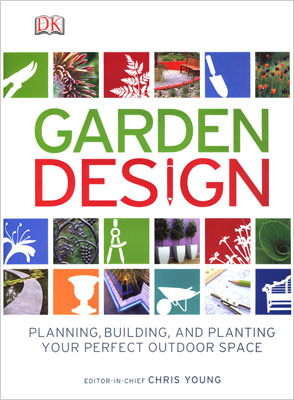
Garden Design by DK Publshing
DK is celebrating spring with its Spring into Gardening promotion. I'm a little late in posting this so if gardening is your thing and you need some gardening books for help, motivation or inspiration, hop on over to DK's website for some great deals on gardening books. Here's my review on one of them:
Garden Design guides the gardener through the design process of creating a perfect outdoor space. It also includes practical advice on implement the plan by picking the best plants and materials.
This book is awesome! It's packed with large wonderful photographs and useful advice. It provided me with tons of inspiration and ideas for my garden that just might keep me busy for years. The book is separated into four logical sections: how to design, choosing a style, making a garden, plant and material guide.
The how to design section starts off things to consider before starting. It then goes through reading plans, using shapes and layouts as well as other design elements. It talks about colour and materials for "hard" items, such was surfaces, screens, structures, etc. and the "soft" items (plants) in general terms. The creating a site plan part goes through some key aspects of creating a plan and looking at options. A planting plan is next. I absolutely loved all of the examples given as well as the case studies, but the rest of the information was a little too brief for me to get a good handle on it.
The choosing a style section briefly explains the different styles. It then launches into more detailed explanations of each one featuring key design elements, influences, garden to visit (for inspiration) before showing some examples. In all, the book goes through 14 different styles. They include: formal, cottage, Japanese, urban, country, modernist, and many more. I have such eclectic tastes that I can't decide which one I like best. I love the clean, straight lines and minimalism of the modernist; the beauty and simplicity of the Japanese; the quirky and fun fusion garden; the originality of the concept garden; and even though I don't have children, the functionality of the family garden. Maybe when I win the lottery I can have one of each.
The making a garden section offers practical information on following through with the plans. The building garden structures part has how-to information on laying a path/patio, building a deck/fence/pergola, as well as putting in a pond. The planting techniques part looks at how-to plant and care for your garden.
Finally, the plant and material guide, suggests options for what to put in your garden. The plant part suggests options for the "soft" item, like trees, shrubs, perennials. I love that the legend for the symbols used is on every other page. No flipping back and forth! For each plant, there's a photo along with a general description. It also lists the size, sun/shade needs, water requirements, and hardiness. Unfortunately, this book doesn't use the hardiness zones we use here in Canada. Instead, it describes plants as being "fully hardy" or "hardy in mild regions/sheltered sites". That's nice, but I'm not sure what that means exactly. There's also a list of suggested alternatives.
The materials guide suggests options for the hard landscaping items in your yard; surfaces, walls and railings, screen and gates, structures and storage, and more. For each option, there's a photo, general descriptions, low/medium/high cost, durability, and colour options. Some of these options are just gorgeous. I had no idea that some of them even existed. I could get really carried away. Unfortunately, my budget has limits.
The table of contents is pretty good. It lists the four main sections along with major items within those sections. The index is quite extensive.
Highly recommended.
For more information about this book or to browse inside, please visit DK's website.
I'd like to thank those nice people at DK Canada for this review copy.
Garden Design by DK Publishing, Dorling Kindersley (DK), ©2009. ISBN 9780756642747(Hardcover), 360p.
Friday, June 7, 2013
Canadian Gardener's Guide by DK Publishing
DK is celebrating spring with its Spring into Gardening promotion. I'm a little late in posting this so if gardening is your thing and you need some gardening books for help, motivation or inspiration, hop on over to DK's website for some great deals on gardening books. Here's my review on one of them:
Canadian Gardener's Guide is filled with helpful advice, ideas and techniques for the Canadian Gardener.
This is a great book. I love that it touches upon many aspects of gardening. From designing and planting to growing your own veggies, troubleshooting problems and selecting the right plant for the right location or look. It really is a terrific book.
It starts off with the basics for the beginning gardener. However, even seasoned gardeners will find useful advice in this section.
The design section takes the gardener though the different designs focusing on the key aspects of each one. Whether it's a place to entertain, a productive garden, a family garden or something else, each 4-page spread features an explanation of the space, a labelled layout, and photographs/explanations of the items that fit with that style. The section also includes how-tos for fence posts, paths or patios, decks, and pergolas.
The plant your garden section features more general information on plants. It's not a how-to guide for planting. It focuses more on designing with the "soft" items (i.e. plants) with style in mind.
The grow your own section uses a hands-on approach. It talks about tools and equipment, preparing the site and other things the gardener needs to know to start growing their own vegetables. The vegetable crop planner (page 202-205) was interesting, but I needed more information on what it meant. The time frames for sowing/planting/harvesting some of the veggies were definitely not meant for the prairies. Harvesting in December? The only thing we harvest in December is snow! My favourite part of this whole section is the information on the specific crops: tomatoes, lettuce, beans, peas, kale, Brussels sprouts. This is going to be invaluable because we planted a vegetable garden this year for the first time. There's a similar section for fruit.
The care for your garden section lists general gardening activities for different seasons, shows the gardener how to water, how to save water, how to plant in containers, how to prune, as well as propagation techniques and care advice for lawns, meadows and ponds.
The help and advice section offers troubleshooting advice for problems in the garden. Whether it's weeds, pests, or deficiencies, the book can help the gardener diagnose what's wrong and potentially fix it. My favourite parts of this section is the A-Z list of common pests and the A-Z list of diseases and disorders. Extremely informative.
The final section is called plant chooser. There are 30 lists for different situations, soil conditions, garden location, etc. Included are: plants of summer containers, water and bog plants, climbers for shade, structural plants, plants for hot, dry sites, and many more. Each of the lists include photos, descriptions, size, sun/shade needs, and water requirements. I absolutely love that the legend for the symbols used is in this part is on every 2nd page. No flipping back and forth. Each of these lists also features some alternative suggestions for plants.
The hardiness zone maps on the endpapers are large and fairly easy to read. It's very cool to see how the zones change radically from west to east and north to south in this country.
The table of contents is huge! It not only lists all of the major sections, but also all of the topics, projects, and whatnot within each section. I love that. The index is pretty extensive. That should help the gardener find information quickly.
Highly recommended.
For more information about this book or to browse inside, please visit DK's website.
I'd like to thank those nice people at DK Canada for this review copy.
Canadian Gardener's Guide by DK, Dorling Kindersley (DK), ©2012. ISBN 978155631781(Hardcover), 448p.
Thursday, June 6, 2013
Gardening Shortcuts by Jenny Hendy
DK is celebrating spring with its Spring into Gardening promotion. I'm a little late in posting this so if gardening is your thing and you need some gardening books for help, motivation or inspiration, hop on over to DK's website for some great deals on gardening books. Here's my review on one of these awesome books:
Gardening Shortcuts breaks down gardening tasks into small chunks so that you can accomplish things in your garden in a relatively short period of time. It has step-by-step instructions for projects as well as plenty of other advice to get your garden, yard and patio looking ship-shape in no time.
This is such an awesome book. Sometimes large project feel daunting because it can be awhile before you see progress, so I love the idea of breaking up the projects into smaller pieces. It makes me feel like I've accomplished something and motivates me to do more. It also allows me to spruce up or fix one part of the yard at a time without having to invest a whole afternoon.
The introduction includes some information on soil type, ground preparation, containers, seeds and buying plants as well as basic tools needed. This stuff is presented up front to avoid repetition later on in the book.
The rest of the book is kind of a mish-mash of ideas and projects. It has some project pages with step-by-step instructions, equipment lists and photos. There are also 2-page spreads that show you how to achieve a certain look in the garden. It lists the plants and elements need to impart a particular style. Other 2-page spreads feature advice on general maintenance. They list a number of jobs and/or projects for the different areas of your yard or garden.
There are a few pages that deal with the garden over winter. Since snow isn't mentioned, I can only assume that this book isn't meant for the Canadian prairies where I live. That's ok. There's enough for me in the other pages to make it a worthwhile read.
The book is filled with wonderful projects and ideas. Here are a few that I picked out to try:
- DIY patio canopy (page 34). I don't have a pergola yet, but I hope to in the near future. This will provide a little shade and some privacy on the deck. Did I mention we don't have a deck yet, either? That's coming soon, too.
- Privacy screens (page 36). Because many of the trees have been cleared around our house (previous owners, not us), our yard is wide-open and not that private. I'm hoping to use some of these ideas to create a few private areas in our yard.
- Lawn into meadow (page 102) and Wildflower meadow (page 170). We have a large section (just over an acre) in our yard that we don't use for much. We are hoping to turn it into a wildflower meadow. That is, if we can keep the weeds down. So far, we left the grass long, mowed a path so that we could walk around it, and threw down a bunch of wildflower seeds. There are still a few tasks, like weed control, that need to be done, but now it's pretty much just wait for the grass and wildflowers to grow. I can certainly do that.
The table of contents is extensive. It lists all of the projects/ideas/tasks in all of the major sections. The index is pretty good, however, I think it's missing some entries. When I was looking for the "meadow" pages, I couldn't find them. Since there are two of them, I would think that warrants an index entry.
Highly recommended.
For more information about this book or to browse inside, please visit DK's website.
I'd like to thank those nice people at DK Canada for this review copy.
Gardening Shortcuts by Jenny Hendy, Dorling Kindersley (DK), ©2012. ISBN 9780756689780(Softcover), 192p.
Great Canadian Plant Guide by DK Publishing
DK is celebrating spring with its Spring into Gardening promotion. I'm a little late in posting this so if gardening is your thing and you need some gardening books for help, motivation or inspiration, hop on over to DK's website for some great deals on gardening books. Here's my review on one of these awesome books:
The Great Canadian Plant Guide offers information on over 3,000 plants for Canadian gardens and lots of general information to help gardeners achieve great results.
This is a great little book with lots of photos and information on more plants than I knew existed. It not only covers perennials, but also annuals and bedding plants. For each plant, there's a short description of the plant and/or bloom as well as information on cultivation, sun and moisture requirements, hardiness zone and size. All of this information is presented with a photo.
The book starts off with a really good introduction on shopping for plants (how to get the right ones, healthy ones), preparing the soil and planting. Closer to the back of the book, there's a planting guide which features a number of plant lists for various conditions, seasons and garden designs. The lists include: plants for poor soil, plants for spring color (which should be "colour"), plants for clay soil, cool color schemes, plants to attract garden birds, and many more. It even includes lists for containers, baskets, and bulbs.
It's small size, roughly 4.25"x5.25", could be really handy for some gardeners. It's small enough to pop into a purse or tote bag or even just carry around the garden store. However, I found it a bit unwieldy to handle. It's small format made the book almost 2" thick, which made the book an odd shape. I don't even think it would look nice on a bookshelf when not in use. The photographs and type are large enough for me to see clearly, but the plant hardiness zone maps on the end papers are not. If the format was enlarged to 8"x10", it thickness would be cut down, which might make it easier to handle.
The book uses the botanical (or Latin) names for many of the plants. There are references to the common names in some cases, but not enough for my liking. For example, in order to find information on a "plume poppy" that I wanted to purchase, I had to first go to the internet to look up the Latin name, "Macleaya cordata", then look that name up in the book. However, since I had already looked it up on the internet, I just read about it there.
Like many other garden books, this one uses symbols for soil moisture preferences/tolerances, sun/shade preferences/tolerances, and hardiness zones. I marked the legend with a little sticky note so that I could easily reference that page when I forgot what the symbols meant.
The table of contents is extremely short, with only 6 entries, if you count the introduction, index and acknowledgements. That leaves only 3 entries for the meat of the book. I'm not sure it's going to be much help. The index, however, is quite extensive and should help the gardener find what they are looking for.
Recommended, even with its shortcomings.
For more information about this book or to browse inside, please visit DK's website.
I'd like to thank those nice people at DK Canada for this review copy.
Great Canadian Plant Guide by DK Publishing, Dorling Kindersley (DK), ©2012. ISBN 9781553631774(Softcover), 704p.
Thursday, May 2, 2013
Fooling Houdini by Alex Stone
In Fooling Houdini, Alex Stone relates his story of how he became a master magician. His story goes beyond the training and hard work, though. He has done lots of research into the brain allowing the reader to see how magic and perception work with human nature.
I loved this book!! The whole thing is absolutely fascinating and so well written. When I pulled this off my shelf to read, I remembered that Mark from HarperCollins had recommended it, but I hadn't remembered that it was a memoir. I wasn't sure I was going to like it or if I was in the mood for a memoir. I shouldn't have worried at all. It really was fantastic.
I loved that Stone delved into so much more than magic. His offered insight into the human brain and how it works with our eyes and hands. To become a magician, he not only attended several magic camps, workshops and seminars to learn about magic, but he also visited psychology labs, Las Vegas casinos and the streets of New York for 3 card Monte games in an effort to understand magic and illusions better.
Richard Turner's story was both amazing and inspiring. He's a blind magician who has absolutely mastered playing card manipulation. Through his story, Stone explains more about the brain, the fingers and how the blind see with their fingers. Amazing!
It shouldn't surprise anyone that magicians who do card tricks or close-up magic need strong, flexible hands. Stone briefly takes the reader through his Finger Fitness (page 91-93) routine, which is essentially calisthenics for the hands. These exercises are not just for magicians. They are for anyone who does a lot of stuff with their hands or for those who've experienced pain in the wrists and hands. I fall into both categories: I type, craft and play the flute and have suffered from some arthritis and repetitive stress pain in my hands. I'll definitely be looking into this fitness routine further.
In one part, Stone relays his disdain for mentalists, whom he calls dishonest liars. He explains how they do what they do, from mind reading to spoon bending, and how easy is for some of us to believe them. This has never been my favourite type of magic, but Stone's explanations were insightful and interesting.
One of my favourite parts of the book was the examination of the 3-card Monte games on the streets of New York. He describes them as a well-choreographed play with numerous "actors" rather than a game or magic trick on a street corner. It was absolutely fascinating. I won't go into any detail, but the bottom line: don't play...ever. You can't win, not even once.
Of course, you can't have a book called Fooling Houdini without covering the Ambitious Card trick that actually fooled Houdini. If you are interested, you can see lots of examples by Googling the name.
Stone even touches upon the fact that the as the world changes, magic, too, has to change. This is evident with the likes of Criss Angel and David Blaine. These new guys are ok, but I much prefer the style of someone like David Copperfield, who, in the grand scheme of magic, is still one of the "new" guys.
Favourite quotes:
...most people have no clue how much skill and creativity and hard work goes into it, because magic is all about art concealing art. (page 137)
The next time I see a magic show or illusion, I won't have to wonder how it was all done. I'll know...basically. It's all done through a lot of hard work and years of training and practice. If nothing else, I'll definitely have a better appreciation for the magicians and their craft.
Highly recommended. I'll be talking about this book for months to come. Every other day or so I remember something that I read and say to my husband, "Do you remember that magic book I read...". He can't possibly forget because I must have said this a dozen times already. ;)
For more information about this book, please visit the HarperCollins website.
I'd like to thank those nice people at HarperCollins for this review copy.
Fooling Houdini by Alex Stone, Harper (HarperCollins), ©2012. ISBN 9780061766213(Uncorrected Proof), 301p.
Tuesday, April 23, 2013
Birds of Western Canada by DK Publishing
For Earth Day, Dorling Kindersley (DK) is celebrating all the good things that come from the Earth or live on the Earth by offering some discounts on books in its Earthly Pleasures boutique.
Birds of Western Canada covers over 390 species of birds that inhabit the region. The book offers photographs and detailed information on each of the birds as well as an introduction about birds in general.
I loved this book! It's a perfect field guide for birds in my area. The information is presented in a easy-to-read format with lots of interesting details and photographs. The most common birds are presented on a full page while the rare ones are grouped four to a page.
Each full page spread features the following bits of information:
• scientific classifications: order, family and species
• several labelled photographs/illustrations showing the bird in flight and various colour forms
• small photograph of the bird in its habitat or displaying typical behaviour
• graphic of the flight pattern
• description, voice, nesting and feeding
• similar species
• maps showing the occurrence in North America
• table noting different characteristics such as size (length, wingspan, and weight), social behaviours, lifespan, and status
Each full page also has a space for the birdwatcher to record the date, time and location of a sighting. I really liked this feature. I'm forever forgetting when and where I've seen certain birds. There's only space for writing in a sighting. However, that's ok because I'll probably only want to record the first sighting.
I have a couple of other field guides for identifying birds. The one for birds in North America has too many birds that I'll probably never see. The one for birds in Manitoba (my province) has many of the birds that visit the province, however, more rare sightings or colour variations are not always represented. This book has more information than the others and seems to be the best of the bunch.
One piece of information in this book that's new to me, is the lifespan of the different birds. While some are relatively short-lived (2-3 years), others live longer, 5-15 years, and some longer still, 25+ years. There's even one (Northern Fulmar, a seabird) who lives up to 50 years. I had no clue that some birds could live so long. Very cool!
The book also includes a table of contents, glossary, and index. Both the table of contents and glossary are adequate, however, the index is too short and is missing some entries, in my opinion. For example, you can look up "Grouse" and find a list of all of the grouses. If you happen to know a specific species, you can also look it up by its full name, like "Ruffed Grouse". However, for birds like the California Quail, Gray Partridge and Ring-necked Pheasant, where there's only one type, the index only lists them once under their full name. That is, there's no entry for "quail", "partridge", or "pheasant".
Highly recommended. This book is going to be one of the most well-used reference books in our house. It's a must have for birders in Western Canada.
For more information about this book or to browse inside, please visit DK's website.
I'd like to thank those nice people at DK Canada for this review copy.
Birds of Western Canada by DK, Dorling Kindersley (DK), ©2013. ISBN 9781553631941(Softcover), 439p.
Natural History by DK Publishing
For Earth Day, Dorling Kindersley (DK) is celebrating all the good things that come from the Earth or live on the Earth by offering some discounts on books in its Earthly Pleasures boutique.
Natural History: The Visual Guide to Everything on Earth presents "a unique record of the rich diversity of life on Earth." It displays over 5000 full colour entries from rocks and minerals to plants, animals and microscopic life forms. The book also highlights a number of individual specimens and species allowing the reader to get a closer look at their splendor.
This is such a fantastic book. It's large format allow for lots of gorgeous labelled photographs and tons of information on the various living organisms. It's amazing how many different specimens are represented. I love being able to get up close to organisms that I wouldn't normally see (species from other continents) and/or ones that I'd rather not see up close (i.e. snakes).
The introduction starts off with explanations about the Earth in general, evolution, human impact and traditional scientific classifications. The most interesting part of this section is the "tree of life", which shows how all of the living organisms are related.
After the introduction, the book splits off into 5 sections: mineral and rocks; microscopic life; plants; fungi; and animals. My favourite parts into these sections are the feature profiles which examine a single species from all angles. For example, the white rhinoceros is photographed from the front, rear and side as well as in a relaxed pose showing most of his head and body. There are also close-up shots of his eye, ear, mouth, horn, hide, foot and tail. In addition to the photographs, there's also some general information and a table with size, habitat and diet listed.
While reading the book, I came across an animal that I had seen in our yard a few years ago, but didn't know what it was. This book allowed me to finally identify it. I had mistakenly identified it as a pine marten, but after seeing a great photograph in this book, I now know it was a fisher.
I was also able to identify one of the many mushrooms we had growing in our lawn a few years ago. It's a lawyer's wig. I remember it vividly because I had photographed it a number of times during the day as it matured and changed.
The book also includes a table of contents, glossary and extensive index.
Highly recommended. This book is going to get lots of use in our household.
For more information about this book or to browse inside, please visit DK's website.
I'd like to thank those nice people at DK Canada for this review copy.
Natural History by DK, Dorling Kindersley (DK), ©2010. ISBN 9780756667528 (Hardcover), 648p.
Monday, April 22, 2013
Compost by Ken Thompson
For Earth Day, Dorling Kindersley (DK) is celebrating all the good things that come from the Earth or live on the Earth by offering some discounts on books in its Earthly Pleasures boutique.
Compost offers information about composting, the different compost bins used, and what to do with the compost after when it's done. It also offers suggestions about how to recycle organic matter without a pile and how to feed your soil.
I have mixed feelings about this book. On one hand it has lots of information about compost and what goes into making it. On the other, I think the author made composting a bit more complicated than it needs to be. His explanation of the carbon to nitrogen ratio (C:N) in various organic matter is detailed and important, but I think it really makes the whole process sound difficult. We've been composting for years with great success and other than making sure we have a good mixture of both "greens" and "browns", we don't give the ratio much, if any, thought.
I didn't love the overall presentation. At times the information was convoluted, repetitive, and/or contradictory. Also, I would have liked to see a clear step-by-step how-to guide on how to make compost that would help the beginner composter get a good start. It's probably all in the book, it's just not as clear and concise as it could have been.
Having said all of that, I learned some things that will no doubt help me make better compost. First, I didn't realize that oak leaves, which we have an abundance of, aren't great leaves for composting (too low in nitrogen and too high in carbon). So far, we haven't had a problem with them, but I'll keep an eye on the bins to ensure the leaves don't cause problems down the line. We've been using various leaves in our compost for over a decade, but oak leaves are relatively new for us. I didn't realize that all leaves were not created equal.
Second, I learned that waste paper can be composted. I sometimes throw tiny pieces of paper into the compost bin, but I hadn't thought of also throwing in full-sized sheets or cardboard, as in toilet paper rolls. I'm definitely going to add more of this and see how it works.
I really liked the green manure concept on page 174. Green manure is "...any crop deliberately grown for a few months and then killed to return the organic matter to the soil." I'm not sure how many people have the space for that or how many want to take up part of their garden for this type of crop, but it's an interesting idea. I'll have to look into it more.
Another interesting idea is to place the compost bin right in the vegetable garden. The soil under the bin will be enriched with the nutrients from the decaying organic matter. Moving it periodically will benefit the soil in various places. (The move can be done when the compost is ready). Also, with the bin in the garden, it's handy for adding garden waste to the compost pile and using the compost once it's finished.
The section on compost bins and piles was quite good. I particularly liked alternative bins, one made from straw bales, the other from old tires.
The book, written in the UK, doesn't cover harsh winters like we experience here on the Canadian Prairies. I hate to keep bringing this up for every gardening book I review, but to me it's important because that's where I live. (Even though it's not covered in the book, you can compost during the really cold winter months. We use black compost bins and while we can't turn the compost in winter, we continue to add to the pile even though it's frozen. In the fall, we make sure the bin is less than half filled so there will be room for all of the stuff we'll add during the winter. The freeze/thaw cycle that happens in the fall and again in the spring helps break down the organic matter. Once the pile is thawed, we turn it, adjust the moisture level as needed, and continue composting.)
The book also contains a table of contents, list of useful websites, and an index. The majority of the websites are UK based.
Recommended. Even though I had some problems with this book, it's still a worthwhile read for novice and veteran composters alike.
For more information about this book or to browse inside, please visit DK's website.
I'd like to thank those nice people at DK Canada for this review copy.
Compost by Ken Thompson, Dorling Kindersley (DK), ©2012. ISBN 9780756613419(Hardcover), 192p.
Subscribe to:
Posts (Atom)